Vourvourou is a picturesque coastal village located in the Halkidiki region of northern Greece. Known for its stunning turquoise waters, sandy beaches, and lush pine forests, Vourvourou offers a tranquil escape for visitors seeking natural beauty and relaxation. The area is also famous for its small islands scattered offshore, perfect for boat trips and snorkeling adventures.
Diaporos is one of the islands near Vourvourou, renowned for its pristine beaches, crystal-clear waters, and unspoiled natural environment. It is a popular destination for day trips, offering visitors the chance to swim, sunbathe, and explore the island’s serene landscapes. Diaporos provides a peaceful retreat for those looking to experience the authentic charm of the Greek coastline.
The Polygyros Run, held annually in Polygyros, Halkidiki, is a celebrated running event organized by the Halkidiki Health Runners Association in collaboration with local authorities and sponsors. Scheduled for September 1, 2025, the 9th edition features three races: a 14.6 km Mountain-City Run starting at 10:15 AM, a 5 km Health Run at 10:00 AM for running or dynamic walking, and a 1 km Children’s Race for ages 8–12 at 11:30 AM. All races begin and end at Heroes’ Square in Polygyros, offering participants a scenic route blending urban and mountainous terrain. The 14.6 km course starts at Heroes’ Square, follows Polytechniou Street, ascends Charilaou Trikoupi and Asklipiou Streets, and transitions to a dirt road after 2.4 km, leading runners through Halkidiki’s stunning forested landscapes. Supported by major sponsors like Thanasis Halkias, Sithonia Liquor Supermarket, Nikoleta Diamantoulaki, Halkias Brothers, and the Halkidiki Physical Education Office, the event promotes health, community, and the natural beauty of Central Macedonia. For registration or inquiries, contact +30 6944 831115 or email polygyrosrun@gmail.com. Visit www.polygyrosrun.gr for more details.
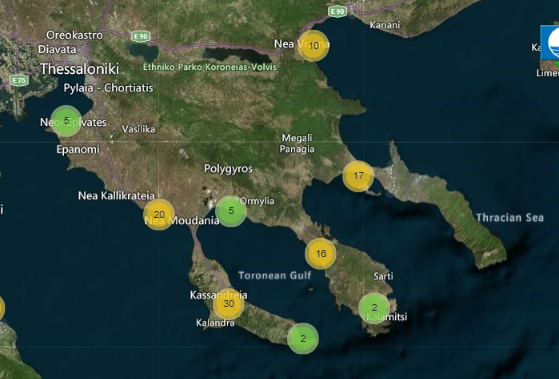
Halkidiki, a stunning peninsula in northern Greece, is renowned for its pristine beaches, many of which have been awarded the prestigious Blue Flag. The Blue Flag is an international eco-label given to beaches that meet strict standards for water quality, environmental management, safety, and accessibility.In 2026, Halkidiki boasts numerous Blue Flag beaches across its three peninsulas—Kassandra, Sithonia, and Athos. These beaches are celebrated for their crystal-clear waters, clean shores, and well-maintained facilities. Popular Blue Flag beaches in Halkidiki include:-
These beaches maintain high standards of cleanliness, provide lifeguard services, and promote sustainable tourism. Halkidiki’s Blue Flag beaches are a testament to the region’s commitment to preserving its natural beauty while offering visitors a safe and enjoyable experience. For the latest list of awarded beaches, check the official Blue Flag website or local tourism resources.
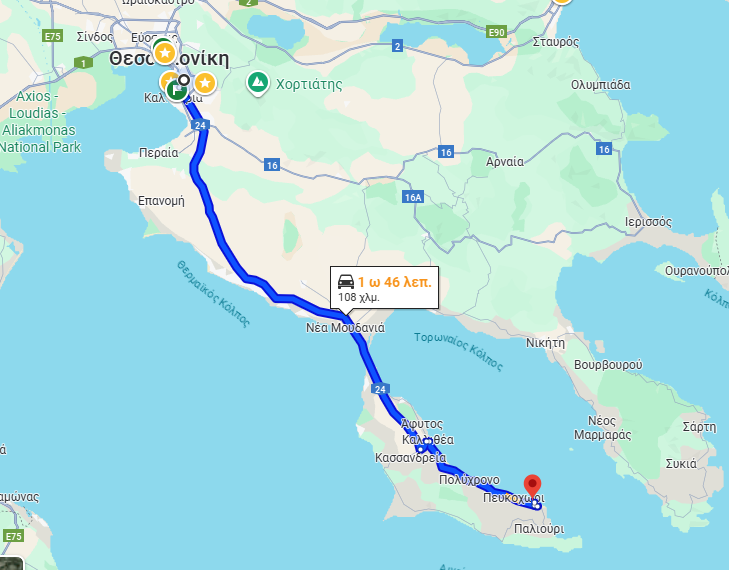
Glarokavos Beach, a hidden gem on the Kassandra peninsula of Halkidiki, is a breathtaking coastal escape that captivates visitors with its serene atmosphere and stunning scenery. Often referred to as “the Blue Lagoon of Halkidiki,” its clear, turquoise waters and unique natural landscape make it a standout destination.
The beach itself is a beautiful blend of soft sand and fine gravel, offering both organized sections with vibrant beach bars and sunbeds, as well as more secluded spots for those seeking tranquility. One of its most distinctive features is the small, natural lagoon at the end of the shore, which creates a mesmerizing mini-harbor for small boats and adds to the area’s exotic charm. The lush pine trees that nearly touch the water provide natural shade and a unique, picturesque backdrop.
For those who enjoy a mix of relaxation and fun, Glarokavos offers a range of activities, from a tranquil swim in its shallow waters to exploring the lagoon by kayak. Its family-friendly atmosphere and convenient access from the nearby village of Pefkochori make it an ideal choice for both locals and international travelers looking for a truly unforgettable beach experience in northern Greece.
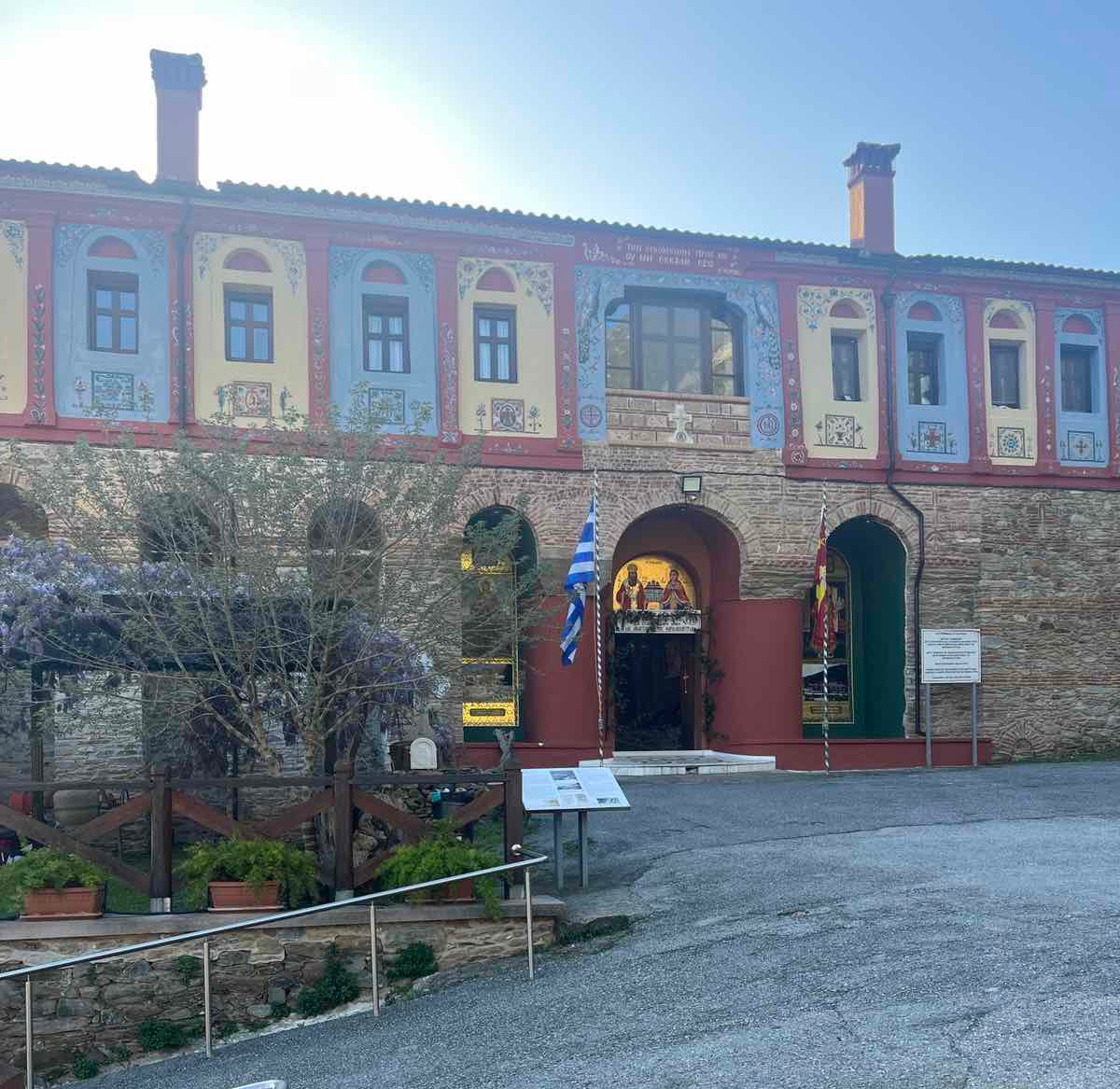
The Monastery of Saint Anastasia the Pharmakolytria, located in the Vasilika area on the outskirts of Thessaloniki, Greece, is a significant Byzantine-era religious site with deep historical and spiritual importance. Founded in 1522 by Saint Theonas, a monk from the Holy Mountain (Mount Athos) and later Archbishop of Thessaloniki, the monastery was originally established near the ancient city of Raidestos (modern-day Tekirdağ in Turkey). However, after the devastating population exchanges following the Greco-Turkish War and the 1923 Treaty of Lausanne, the monastic community was forced to relocate to Greece, rebuilding the monastery in its current location in 1924.
The name “Pharmakolytria” translates to “Deliverer from Potions” or “Healer from Poisons,” reflecting the saint’s legendary role in protecting people from magical spells, poisons, and spiritual afflictions. Saint Anastasia, a 3rd-century Roman martyr born in Rome around 281 AD, was executed during the persecutions under Emperor Diocletian. According to tradition, she was a noblewoman who secretly aided imprisoned Christians, using her knowledge of pharmacology (hence “pharmakon” for medicine or poison) to heal the sick and counteract sorcery. Her relics, believed to possess miraculous healing properties, were transferred to the monastery during its relocation and remain a focal point for pilgrims seeking relief from physical and mental ailments, including addiction and psychological disorders.
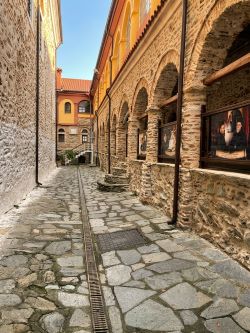
Architecturally, the monastery features a classic Byzantine cross-in-square Katholikon (main church), adorned with frescoes from the 16th to 19th centuries that depict scenes from the saint’s life, biblical events, and Orthodox saints. The complex includes monastic cells, a library housing rare manuscripts and icons, gardens, and a museum showcasing ecclesiastical artifacts, Byzantine icons, and relics from Raidestos. The site is surrounded by lush greenery, offering a serene retreat from urban Thessaloniki, just 20 km away.
Today, the Monastery of Saint Anastasia operates as a female convent under the Ecumenical Patriarchate of Constantinople. It attracts thousands of visitors annually, especially during its feast day on December 22, when liturgies, processions, and healing services draw faithful from across Greece and beyond. The monastery is renowned for its charitable works, including support for those battling substance abuse, and produces traditional products like honey, herbs, and icons. Recognized for its cultural heritage, it stands as a symbol of resilience for the Greek Orthodox diaspora from Asia Minor, blending history, faith, and community in the heart of Macedonia.
Experience dynamic versatility with this exceptional 2019 SEAT Leon ST, commonly known as the Karavan. Combining sharp, contemporary design with family-focused practicality, this estate model delivers a refined driving experience. Standard features include full LED technology, integrated roof rails, and a generous 587-liter boot, expanding to 1470 liters. This specific 2019 model (pre-facelift 5F generation) is powered by an efficient yet responsive engine, ensuring performance and reliability on every journey. Meticulously maintained and in superb condition, it represents a perfect balance of sportiness, utility, and modern engineering.
*Note: This image has been enhanced with AI, but the excellent condition and representation of the vehicle are accurate.*
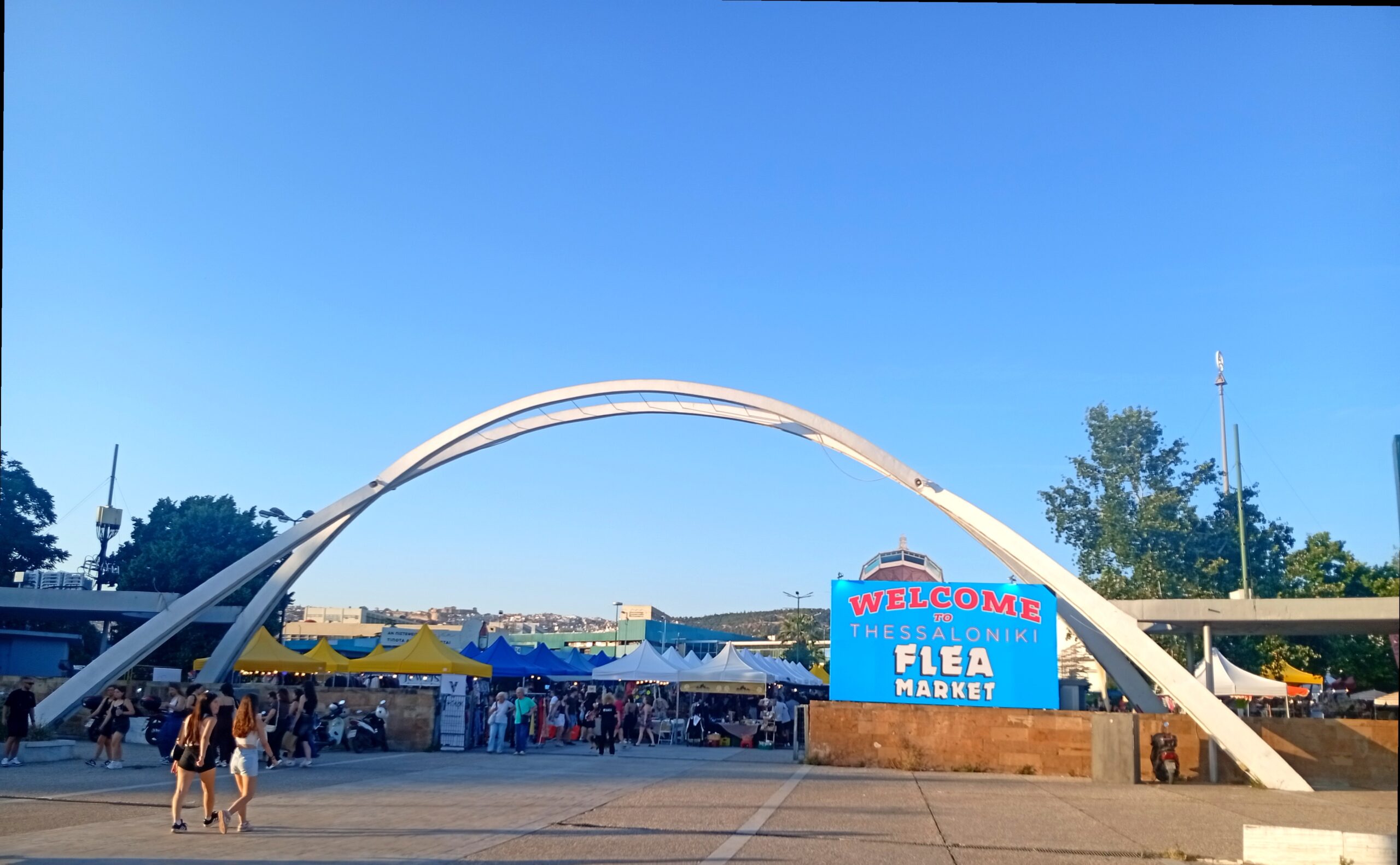
Every weekend, the area around the Lower Gate of the Thessaloniki International Exhibition transforms into one of the city’s most vibrant and beloved open-air markets. Hundreds of vendors line the grounds, offering an eclectic mix of vintage clothing, antiques, collectibles, old tools, books, vinyl records, ceramics, and one-of-a-kind handmade treasures. The market has a character all its own — bustling yet unhurried, chaotic yet charming. It attracts locals, tourists, collectors, and casual browsers alike, all united by the thrill of the unexpected find. From mid-century furniture to rare Greek coins, from retro cameras to handwoven textiles, every visit tells a different story. Whether you’re a seasoned treasure hunter or a first-time visitor, the Flea Market at Kato Pyli is an unmissable slice of authentic Thessaloniki life. Come early for the best selection, take your time wandering the stalls, and don’t be shy about negotiating — it’s all part of the experience.
📍 Lower Gate, Thessaloniki International Exhibition 🗓️ Every Saturday & Sunday, from early morning
A Living Window into the Ancient Heart of a Great City
Thessaloniki, Greece · History & Travel · Ancient Sites
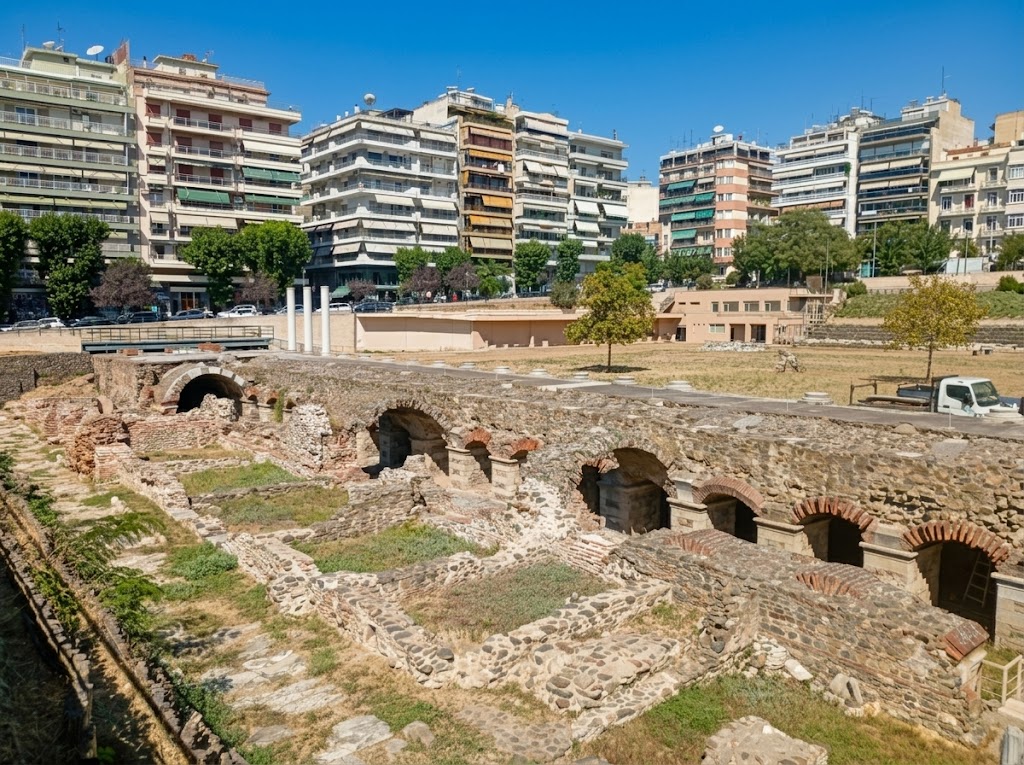
In the very center of modern Thessaloniki, just a few steps away from the busy cafes and pedestrian streets of today, lies one of northern Greece’s most remarkable archaeological treasures: the Roman Agora. Hidden beneath the city for centuries, this ancient forum was the beating heart of Roman Thessaloniki — a place where merchants haggled, citizens debated, and the social fabric of an entire civilization was woven, day after day.
A City at the Crossroads of Empires
Thessaloniki was founded in 315 BC by Cassander, King of Macedon, who named it after his wife — the half-sister of Alexander the Great. Its position on the Via Egnatia, the great Roman road connecting Rome to Constantinople, made it one of the most strategically important cities in the ancient world. Where major roads meet, power follows — and with power comes monumental architecture.
When the Romans consolidated their control over Macedonia, they transformed Thessaloniki into a regional capital and model Roman city. Following classic urban planning principles, they laid out the city along two main axes: the cardo, running north to south, and the decumanus, running east to west. At their intersection — the most prestigious location in any Roman city — they built the Agora.
Building the Forum: History in Stone
The construction of the Roman Agora is generally dated between 42 BC and 138 AD, a period that saw Rome at the height of its imperial ambition. Some scholars, however, argue that major phases of construction belong to the later Tetrarchic period — the late 3rd and early 4th century AD — when Thessaloniki served as one of the four capitals of the Roman Empire under Galerius.
The Agora followed the standard blueprint of Roman forums across the Empire: a large rectangular open courtyard, paved with marble slabs, flanked on all sides by covered colonnaded walkways known as stoas. Around this central square stood shops (tabernae), administrative offices, and public buildings. It was simultaneously a marketplace, a civic center, and a stage for public life.
💡 Did you know? The western arcade of the Agora was known as the “Copper Arcade” because it was home to many coppersmiths. This tradition survives to this day — Chalkeon Street (from the Greek word for copper) nearby is still associated with metalwork and crafts.
One of the most striking features of the Agora was the so-called “Arcade of Images” at the southeastern entrance. Until the 19th century, a remarkable group of female statues stood here, carved as two-faced pillars depicting mythological figures — Maenad, Ariadne, Leda, Nike, and others. Locals affectionately called them the Ikantada (“the enchanted ones”). Sadly, these sculptures were removed and now reside in the Louvre Museum in Paris.
Rediscovered by Accident
Like so many ancient wonders, the Roman Agora did not announce itself — it was found by chance. In 1966, during urban construction work in the city center, workers’ tools struck ancient stone. What followed was one of the largest and most significant archaeological excavations in Thessaloniki’s modern history. The planned building project was halted, and archaeologists were called in to uncover what lay beneath.
What they found was extraordinary: the remains of a two-terraced forum, a well-preserved Odeon (a small covered theater), colonnaded walkways, and an underground museum space that would eventually be opened to the public. Restoration work began in earnest in 1989 and continues to this day.
The Odeon: Where Ancient Voices Still Echo
One of the highlights of any visit to the Roman Agora is the restored Odeon — a semicircular amphitheater that once hosted musical performances, poetry recitals, and civic gatherings. Today, the Odeon has been carefully restored and is used for cultural events, concerts, and performances during Thessaloniki’s vibrant festival season. Sitting in its stone seats at dusk, watching a live performance, is an experience that collapses two thousand years of history into a single, unforgettable moment.
What to See Today
The site as it stands today offers visitors a layered experience of ancient urban life. Walking through the Agora, you can explore:
The expansive marble-paved central courtyard
Restored Corinthian columns standing tall against the Thessaloniki skyline
The remains of colonnaded stoas and ancient shop foundations
The restored Odeon amphitheater
An underground museum displaying artifacts and explaining the site’s history — with innovative tactile replicas accessible to visually impaired visitors
Location
City center, near Egnatia Street (surrounded by Filippou, Olympou & Makedonikis Amynis streets)
Opening Hours
Typically 8:00 AM – 3:00 PM daily (confirm locally before visiting)
Admission
Approx. €2–6 depending on current policy · Free entry on select days
Visit Duration
30–60 minutes for the site · Allow more for the underground museum
A Site Within a City of Sites
The Roman Agora does not stand alone — it is the centerpiece of a remarkable cluster of ancient monuments in Thessaloniki’s historical core. A short walk east brings you to the Arch of Galerius (Kamara) and the Rotunda, both dating from the same imperial era. Nearby, the magnificent Church of Agios Dimitrios — dedicated to the city’s patron saint — contains an ancient crypt with early Christian and Roman remains. For deeper context, the Archaeological Museum of Thessaloniki and the Museum of Byzantine Culture are both easily reachable on foot.
Thessaloniki is often called the most Byzantine city in Greece — but the Roman Agora reminds us that the story begins even earlier, in the marble and ambition of an empire that once stretched from Scotland to Syria.
🗺 Visitor Tip: Combine your visit to the Roman Agora with a walk along Egnatia Street — the modern road built directly over the ancient Via Egnatia. You’ll be retracing the steps of Roman legions, medieval pilgrims, and Ottoman traders all at once.
Why It Matters
In an era when ancient history can feel distant and abstract, the Roman Agora of Thessaloniki offers something rare: immediacy. It sits not in a remote field or behind a museum wall, but in the middle of a living, breathing city. Office workers eat lunch on its steps. Children run between its columns. Tourists and locals alike pass through its ancient stones as naturally as they cross any modern square.
That continuity — ancient and modern, layered and alive — is perhaps the Agora’s greatest gift. It doesn’t ask you to imagine the past. It places you inside it.
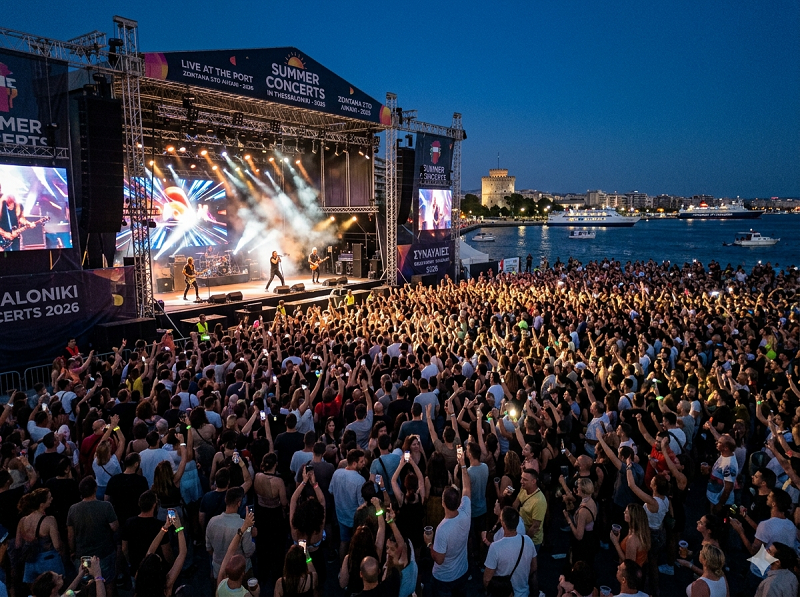
Summer 2026 in Thessaloniki is packed with major concerts and music festivals, featuring both the Greek music scene and great international artists. Here is the comprehensive list of the most important musical performances, organized by month and date:
📅 June 2026
June 22: Konstantis Pistiolis | AUTH Ceremony Hall (Aithousa Teleton)
June 24: Vassilis Papakonstantinou | Theatro Gis (Theatre of the Earth)
June 24: Yousuke Yukimatsu (Techno live) | Project Sfageia (Labattoir)
June 25: China National Opera – “Turandot” (G. Puccini) | Thessaloniki Concert Hall (Megaro Mousikis)
June 28: Bryan Adams | Thessaloniki Concert Hall (Megaro Mousikis)
June 29: “A Night of Queen” by The Bohemians | Theatro Kipou (Garden Theatre)
📅 July 2026
July 1: Sokratis Malamas | Apollon Kalamarias Stadium
July 1: Ioulia Kallimani | Theatro Gis (Theatre of the Earth)
July 2: Giorgos Alkaios (360° Show) | Aristoteleio Theatre
July 7: Evidence (Dilated Peoples) | Polychoros Soul SKG
July 8: Eleni Foureira | Theatro Gis (Theatre of the Earth)
July 8: Locomondo | Moni Lazariston / Aristoteleio
July 9: Ezhel | Thessaloniki (Ticketmaster Venue)
July 9: Evridiki & Thodoris Marantinis (50 Shades of Rock) | Moni Lazariston (Lazaristes Monastery)
July 15: Thievery Corporation (30 Years Anniversary Tour) | Moni Lazariston (Lazaristes Monastery)
July 17: Yngwie Malmsteen | Moni Lazariston (Lazaristes Monastery)
July 17 – 18: Onar All Day Fest (featuring Christos Mastoras & Melisses) | Thessaloniki
July 20: Pink Martini | Moni Lazariston (Lazaristes Monastery)
July 25: Slaughter to Prevail | Moni Lazariston (Lazaristes Monastery)
July 27: Il Volo | Theatro Gis (Theatre of the Earth)
📅 August & September 2026
August 15: Giorgos Alkaios | Thessaloniki (Ticketmaster Venue)
September 3: George Dalaras (Tribute to Rebetiko) | Theatro Gis (Theatre of the Earth)
September 7: Stelios Rokkos | Aristoteleio Theatre
September 16 – 20: Reworks Festival 2026 (The city’s premier visual & electronic music festival across various venues)
September 19: Marina Spanou | Aristoteleio Theatre
September 19: The Crazy World of Arthur Brown | WE Cultural Space
September 26: Tito & Tarantula | WE Cultural Space
💡 Note: Since we are in the peak of the summer season, major open-air festivals in the city (such as the Forest Festival / Festival Dasous, the Municipality’s Summer Festival, and events at Moni Lazariston) constantly add last-minute dates for Greek popular, folk, and hip-hop nights.
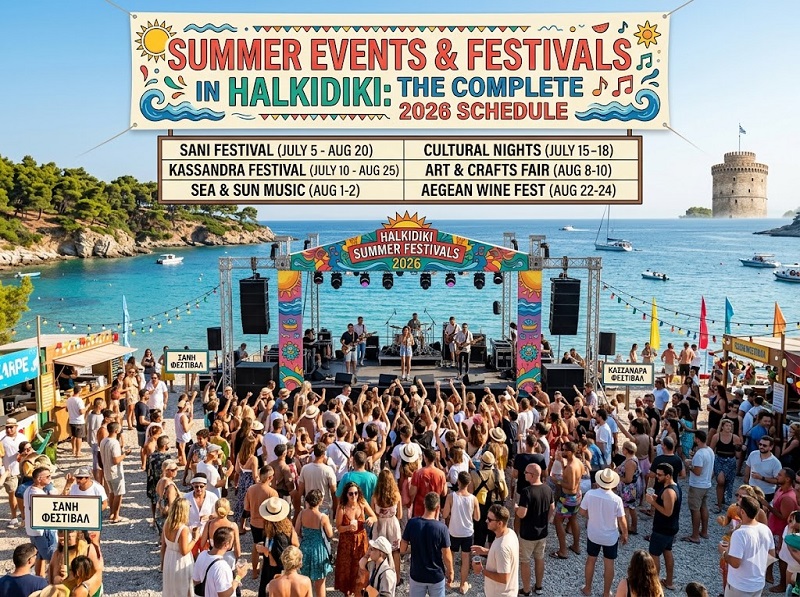
Summer Events & Festivals in Halkidiki: The Complete 2026 Schedule
Summer 2026 in Halkidiki is not just about golden beaches and turquoise waters; it is also a cultural hub featuring world-class jazz, classical music, international pop stars, and authentic Greek theatrical performances. From the prestigious Sani Hill to the open-air amphitheaters of Kassandra and Nea Moudania, here is your ultimate English guide to Halkidiki’s summer highlights over the next three months:
🎵 Major Summer Music & Arts Festivals
Sani Festival (Sani Hill, Kassandra): Celebrating over three decades, this iconic festival hosts global jazz, classical, and contemporary music icons under the stars. Events run mid-July through August.
Kassandra Festival (Siviri Amphitheater): The cultural heart of the first peninsula, featuring major Greek concerts, ancient drama revivals, and modern theatrical plays.
Festival of the Sea (Nea Moudania Amphitheater): A stunning open-air venue by the waterfront, known for its diverse lineup of musical acts and theatrical productions throughout July and August.
📅 Event Schedule: June – August 2026
Late June: Opening theatrical performances and local modern dance showcases | Siviri & Nea Moudania Amphitheaters
July 4: Local Sardine Festival (Traditional food, wine, and live folk music) | Nea Moudania Beach Front
Mid-July: Sani Festival Grand Opening (International Jazz & World Music Headliners) | Sani Hill
July 18 – 19: Greek Folk & Pop Concert Lineup | Siviri Amphitheater
Late July: International Classical & Pop Vocalists | Sani Festival
July 25 – 26: Traditional Feast of Agia Paraskevi (Local cultural dance and live instruments) | Agia Paraskevi Village
August 1 – 2: Ancient Greek Drama / Comedy Theatrical Tour | Festival of the Sea, Nea Moudania
Mid-August: Sani Festival Classical Music & Opera Gala | Sani Hill
August 15: The Great Panigiri of Panagia (The biggest traditional celebration of the summer with local delicacies and dancing) | Polygyros, Afytos, and Sarti
Late August: Acoustic Rock & Entechno Greek Concerts (Closing Events) | Kassandra Festival, Siviri
🐟 Popular Local Gastronomy Festivals (Panigiria)
If you want to experience authentic local culture, don’t miss these traditional annual gatherings:
Sardine Festival (Nea Moudania) – Early July: Free fresh grilled sardines and local white wine served right next to the sea.
Olive Festival (Olynthos) – Late July / Early August: Celebrating Halkidiki’s famous green olives with traditional Greek music, dances, and local treats.
Honey Festival (Fourka / Nikiti) – August: Sample exceptional local pine and flower honey, sweets, and traditional tsipouro.
💡 Traveler’s Tip: Most open-air concerts and theatrical performances in Halkidiki start at around 21:00 or 21:30 to enjoy the cooler summer evening breeze. Booking tickets in advance for Sani Hill events is highly recommended as seating is limited.
Thessaloniki’s waterfront has once again transformed into a vibrant cultural hub, welcoming book lovers to the 45th Panhellenic Thessaloniki Book Festival. Running from June 19 until July 5, 2026, the city’s most beloved summer cultural institution is set up along the New Waterfront (Nea Paralia), stretching from the White Tower to the Statue of Alexander the Great.
Organized by the Association of Book Publishers of Northern Greece, the festival hosts dozens of stalls featuring hundreds of publishing houses from across the country. It offers visitors the unique experience of browsing new releases and classic literature with the Thermaikos Gulf as a backdrop. Operating daily from 19:00 to 23:00, it is the perfect evening stroll for families, locals, and tourists alike.
Beyond the book stalls, the festival is a lively cultural celebration, featuring book signings, meet-and-greets with renowned Greek authors, musical events, and activities dedicated to young readers. For over four decades, this open-air festival has remained a staple of Thessaloniki’s summer, proving that even in the digital age, the magic of turning a page remains unmatched.
Discover two of the most revered and serene spiritual destinations near Thessaloniki with our exclusive, stress-free private taxi tour. Perfect for individuals, families, or small groups, this tailored excursion combines comfort, history, and deep spirituality.
Tour Highlights
Stop 1: Holy Monastery of St. John the Theologian (Souroti) Located just 25 km from Thessaloniki, this beautiful monastery is a major pilgrimage site. It is famously home to the tomb of Saint Paisios the Athonite, one of the most beloved modern saints of the Orthodox Church. Walk through the peaceful gardens, pay your respects, and experience the profound tranquility of the grounds.
Stop 2: Holy Monastery of St. Anastasia the Pharmakolytria A short 20-minute drive further takes us to the historic, Byzantine-era monastery of St. Anastasia, nestled at the foot of Mount Chortiatis. Dating back to the 9th century, this historic site is dedicated to St. Anastasia, known as the “Deliverer from Potions/Poisons.” Its stunning architecture and rich heritage offer a captivating step back in time.
Why Choose This Tour?
Door-to-Door Service: We pick you up directly from your hotel, apartment, or Thessaloniki Airport and bring you back safely.
Flexible Schedule: No rushing. You can explore each monastery at your own pace while your driver waits for you.
Comfort & Privacy: Travel in a modern, fully air-conditioned, clean vehicle with a professional, English-speaking local driver who knows the routes perfectly.
Tour Details
Total Duration: Approximately 3.5 to 4 hours (including travel and sightseeing time).
Total Distance: ~70 km round-trip from Thessaloniki center.
Book your spiritual private tour today and experience the peaceful side of Macedonia in absolute comfort!
Tip: Please note that both monasteries enforce a strict dress code (long skirts and covered shoulders for women, long trousers for men).
Tour Itinerary & Timeline
08:00 | Departure from the designated pickup point
08:30 | Arrival at the Holy Monastery of St. John the Theologian (Souroti)
09:30 | Departure heading to the Monastery of St. Anastasia
10:00 | Arrival at the Holy Monastery of St. Anastasia the Pharmakolytria
11:30 | Departure for the return journey
12:00 | Arrival and drop-off at your destination
Terms & Conditions
Traffic Delays: In the event of an delayed return due to external factors beyond our control (such as heavy traffic or road delays), no additional charges will apply.
Extra Waiting Time: Any requested extension or additional waiting time outside the scheduled itinerary is charged at €15 per hour.



 Discover two of the most revered and serene spiritual destinations near Thessaloniki with our exclusive, stress-free private taxi tour. Perfect for individuals, families, or small groups, this tailored excursion combines comfort, history, and deep spirituality.